
Half Truckload vs. Full Truckload Junk Removal Pricing Guide for Homeowners
A half truckload of junk removal typically costs between $200 and $400, while a full truckload runs anywhere from $450 to $800 or more depending on your location, the type of debris, and the service provider you choose. Knowing which option fits your situation is the fastest way to avoid overpaying and get your property cleared out without any surprises.
Whether you are cleaning out a garage after years of buildup, preparing a home for sale, or finally tackling that basement that has been collecting clutter since 2019, understanding how junk removal companies price their trucks is the key to making a smart decision. At Glendale Cleanout Services, we get this question from clients every single week, so we put together this honest breakdown to help you budget confidently before you even pick up the phone.
What Does a Half Truckload Actually Look Like?
A half truckload is roughly 180 to 240 cubic feet of space inside a professional junk removal truck. To give you a more visual picture, that is about the equivalent of two to three full pickup truck loads. A standard junk removal truck measures approximately 220 cubic feet at the half load level.
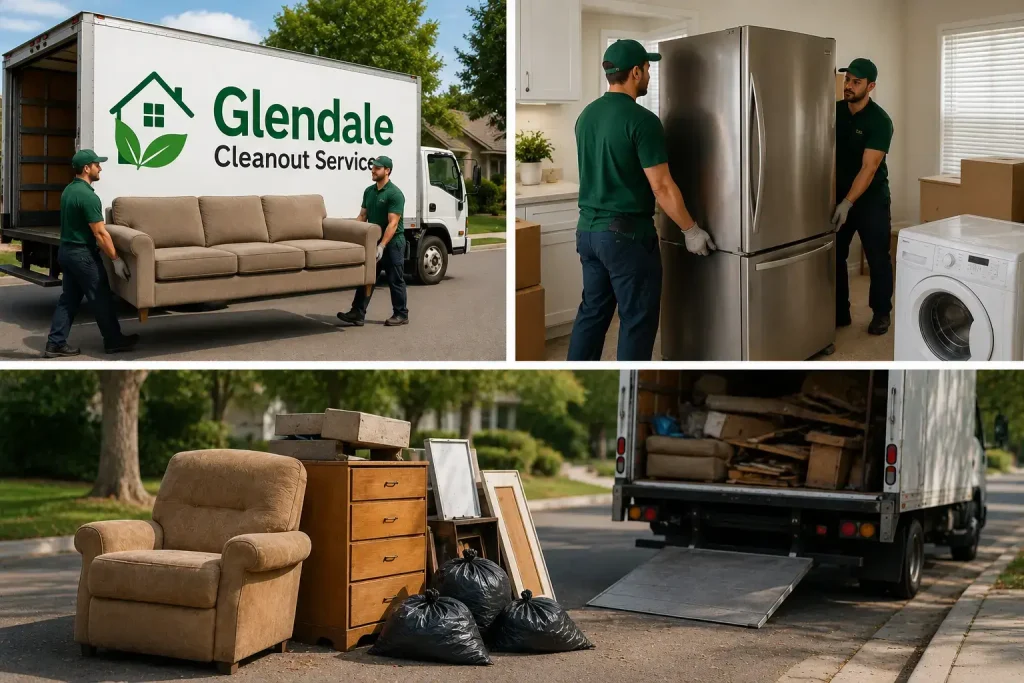
In practical terms, a half truckload comfortably handles a small apartment cleanout, a single room estate clearing, or a combination of bulky items like a sofa, a dining set, several boxes of miscellaneous items, and a couple of old appliances. A half truckload can handle a small apartment cleanout and typically falls in the $200 to $400 range.
This is the sweet spot for people who have more than a couple of items but definitely do not need to fill an entire truck. It is also the load size most commonly booked by clients doing a room by room declutter rather than a whole property overhaul.
What Does a Full Truckload Cover?
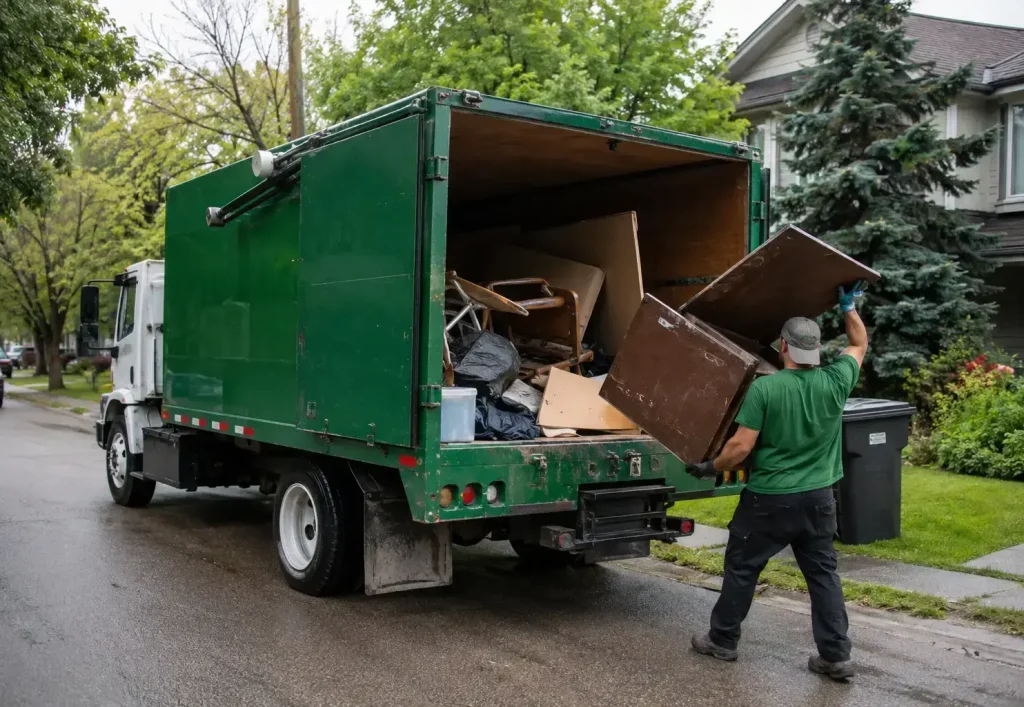
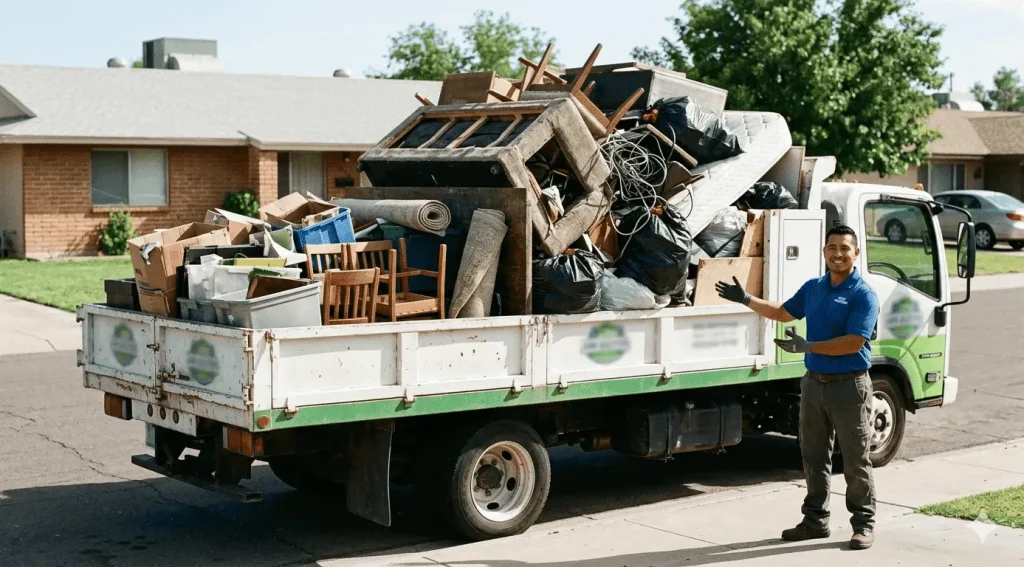
A full truckload represents the entire capacity of a professional hauling truck, generally measuring around 400 to 480 cubic feet. A full truckload measures approximately 440 cubic feet. That is the equivalent of five to six pickup truck loads worth of material hauled away in one single visit.
At this volume, you are dealing with major projects. Think full garage cleanouts, estate clearings after a loved one passes, post renovation debris removal, whole home decluttering before a move, or commercial space turnovers. For larger projects like an entire estate or office cleanout, a full truckload can cost anywhere from $600 to $800.
A full truck is not always about volume alone. Many customers choose to book a full truck simply to guarantee the crew stays on site long enough to handle everything in one visit, saving them the hassle of scheduling a second pickup.
Breaking Down the Price Difference by Load Size
Here is a clear comparison of where your money goes at each tier so you can estimate your costs before calling any provider:
Minimum or Eighth Load (45 to 60 cubic feet) This covers a couple of small items, a mattress, a few boxes, or a single piece of furniture. A minimum load is available for $70 to $125, catering to minimal disposals.
Quarter Truckload (90 to 120 cubic feet) Perfect for a small cleanout, a few pieces of furniture, or clearing a spare bedroom. A quarter truckload ranges from $100 to $175, perfect for smaller jobs.
Half Truckload (180 to 240 cubic feet) The most popular tier for medium projects. A half truckload is priced at $175 to $375, suitable for medium sized projects. At Glendale Cleanout Services, our half truck jobs most frequently involve two to three room cleanouts, garage declutters, or small renovation debris pickups.
Full Truckload (360 to 480 cubic feet) For major jobs with no room to spare. A full truckload costs $400 to $800, ideal for major cleanouts or large renovations.
Why the Price Gap Exists Between Half and Full Truckload
The price difference between a half and full truckload is not just about the extra cubic feet. Several cost layers stack on top of each other as volume increases.
Labor time increases significantly. More items mean more lifting, more trips down hallways or staircases, and more loading time. Labor is a significant cost component in every cleanout job, and that cost grows alongside the load.
Disposal fees scale with weight. A truck full of cardboard boxes costs less to haul and dispose of than the same volume of concrete or construction debris. Heavy materials increase disposal fees at transfer stations and landfills. A full truck of heavy furniture or appliances will cost more to dump than a full truck of light household clutter, even if they take up the same space.
Fuel and transport costs are higher. A heavier, fuller truck burns more fuel and may require a dedicated trip to the landfill or recycling facility without combining runs.
Accessibility adds to any load size. A ground floor cleanout goes faster than hauling items down three flights of stairs or across a large property. If your items are in an attic, a basement, or behind other stored goods, expect the time and cost to climb regardless of load size.
Half Truckload vs. Full Truckload: Which One Do You Actually Need?
This is the question most clients wrestle with. Here is a simple way to think about it.
Choose a half truckload if you are clearing one to two rooms, handling a small apartment, removing a handful of large items, or working within a tighter budget and can sort out some items yourself before the crew arrives.
Choose a full truckload if you are handling a whole home cleanout, an estate, a garage plus multiple rooms, any post construction debris situation, or if you simply want the job done completely in a single visit without worrying about whether everything will fit.
When in doubt, request an on site estimate. Most reputable services including Glendale Cleanout Services will send someone out to assess your load before locking in a price, so you never get stuck paying for a full truck when a half truck would have done the job.
What Factors Drive Your Final Price Up or Down?
Beyond volume, several additional variables determine what you will actually pay on the day of your cleanout.
Item type and weight. Standard household furniture is priced differently than heavy construction debris, appliances with refrigerants, electronics, or mattresses. Many junk removal services account for weight if you have things like concrete, bricks, soil, or especially heavy items like pool tables or hot tubs.
Special disposal requirements. Certain items cannot go to a standard landfill. Appliances containing Freon, old televisions, computers, and paint all require specific handling that adds to your total. Common examples include appliances like refrigerators and air conditioners which contain refrigerants, mattresses, tires, and e-waste like old computers and TVs.
Season and demand. Spring and early summer tend to be peak seasons for cleanout projects. Most homeowners carry out construction and renovation projects in the spring and early summer, so costs could be a touch higher during these seasons. Booking in the fall or winter can sometimes land you a better rate.
Location and local disposal costs. Urban areas and regions with stricter environmental regulations typically carry higher dump fees, which get passed along to the customer. Where you live and where the junk is located both play a role in cost. Junk removal tends to be a bit more expensive in areas with a higher cost of living or where disposal fees are steep.
How to Get the Most Value No Matter Which Option You Choose
Knowing the difference in price is only half the equation. Getting the best value means going in prepared.
Stage your items in one accessible area before the crew arrives. This speeds up the job significantly and prevents any ambiguity about what is being taken. Consolidate items in one accessible area. When everything is staged in a garage or driveway, the job moves faster.
Separate donation worthy items before booking. Furniture, appliances, and household goods in good condition can often be donated rather than dumped, which may reduce the volume of your load and lower your cost.
Be upfront about heavy or specialty items. Letting the crew know in advance about pianos, safes, concrete, or refrigerators gives them time to prepare the right equipment and give you an accurate price without surprises on the day.
Get an on site quote rather than a phone estimate. Volume is difficult to judge over a description. A walk through allows the crew to assess exactly what you have and what it will realistically take to clear it.
At Glendale Cleanout Services, every estimate includes a free on site assessment so clients always know what they are paying before anyone lifts a single item. Transparency is the standard, not the exception.
Is a Half Truckload Ever More Expensive Per Cubic Foot Than a Full Truckload?
Yes, and this surprises most people. When you break down the cost per cubic foot, a full truckload often delivers better value than a half truckload because the base operational costs, including dispatching the crew, fuel to your location, and minimum trip time, remain largely the same regardless of how much you fill the truck.
A quarter truckload costs the same whether it takes 20 minutes or an hour to load. You are paying for results, not time. What this means practically is that if your load is hovering somewhere between a half and a full truckload, it sometimes makes more financial sense to round up and get everything cleared in one go rather than scheduling a second trip at a similar minimum base rate.

Common Projects That Match Each Load Size
Half Truckload Projects Small apartment move out cleanouts, single room estate clearings, garage declutters with a few bulky items, small renovation debris after one room remodel, and outdoor furniture or yard waste removal.
Full Truckload Projects Complete home estate clearings, post renovation whole home debris removal, commercial office or retail space turnover, storage unit cleanouts, and hoarder home situations where multiple rooms need to be fully emptied.
Final Thought: Pricing Transparency Is the Starting Point
The difference in price between a half truckload and a full truckload comes down to volume, weight, item type, location, and the specific company you hire. Homeowners typically spend about $241, with most jobs landing between $60 and $700. Your actual cost will sit somewhere in that range depending on where your cleanout falls on the spectrum.
What matters most is working with a team that gives you a clear, honest estimate before the work begins. At Glendale Cleanout Services, that commitment to upfront pricing and professional service is what keeps clients coming back and what sets a reliable cleanout company apart from the rest. Whether you need a half truck or an entire load taken out, the goal is always the same: your space cleared, your stress reduced, and your wallet respected.
Ready to get a free estimate? Reach out to Glendale Cleanout Services and find out exactly which load size fits your project before you spend a single dollar.